
Last updated: August 2026
Park your car on a stretch of highway, shift into neutral, take your foot off the brake — and watch it roll uphill on its own. That’s the promise of Magnetic Hill Ladakh, one of the most talked-about roadside stops on any Leh itinerary. Thousands of travelers have filmed it, tested it, and argued about it. Here’s what’s actually going on.
Quick Facts
| Location | Leh-Kargil Highway (NH-1), Ladakh |
| Distance from Leh | Approx. 27-30 km |
| Altitude | Approx. 14,000 ft (some sources cite 11,000 ft) |
| Entry fee | None |
| Best time to visit | May to October |
| Typical visit duration | 10-20 minutes |
| Nearby landmark | Gurudwara Pathar Sahib |
| Nearest airport | Leh (Kushok Bakula Rimpochee) Airport, approx. 30-32 km |
What Actually Happens at Magnetic Hill
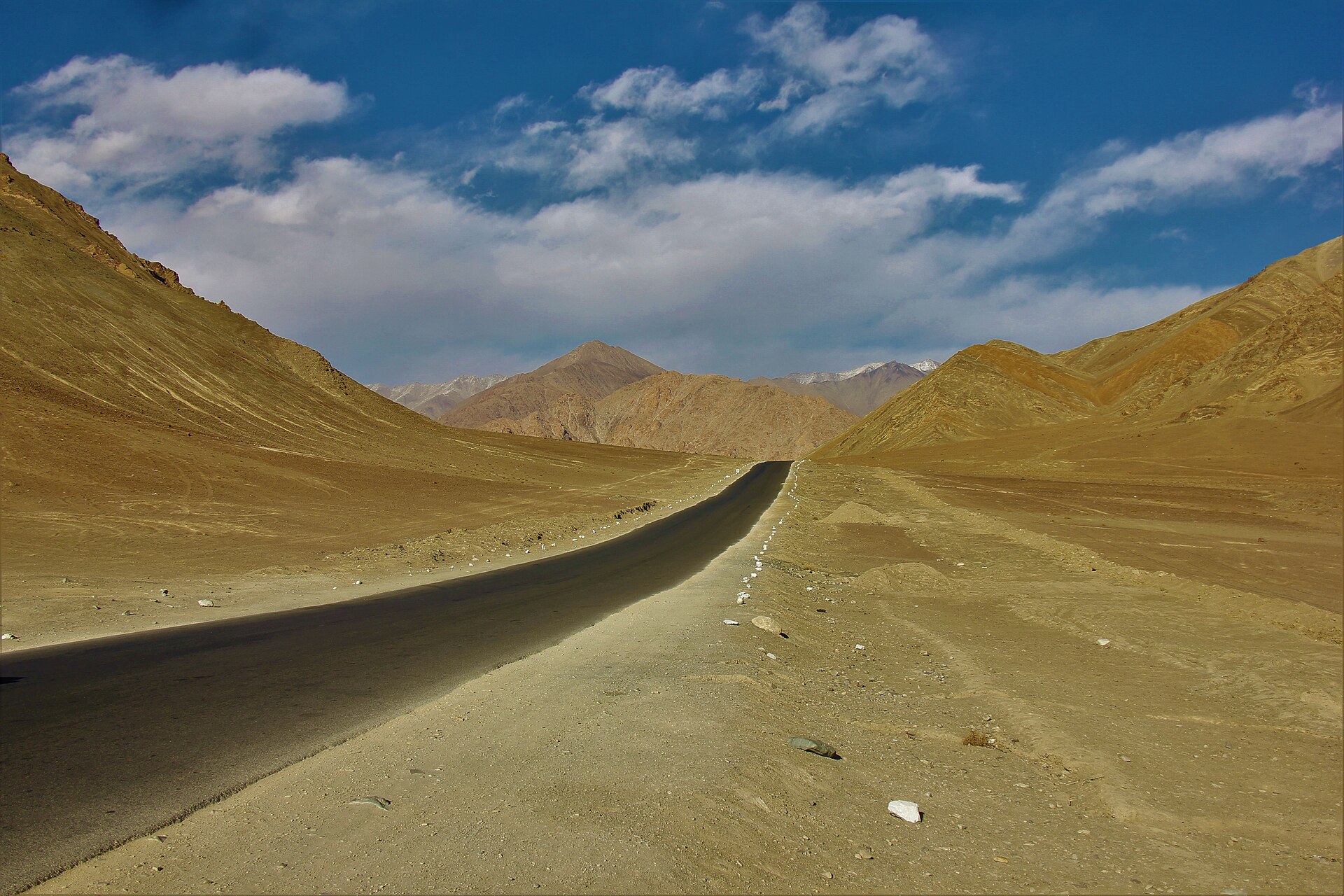
Drive along NH-1 toward Kargil, and you’ll spot a yellow box painted on the road by the Border Roads Organisation, marking the exact spot to stop. Park your vehicle inside that box, put it in neutral, release the brake — and it starts rolling forward, seemingly uphill, often reaching speeds of 10-20 km/h. Even the nearby Indus River appears to flow in the wrong direction along this stretch. It’s a genuinely strange thing to witness in person, however many times you’ve read the explanation beforehand.
Three Theories, One Real Answer
The magnetic force theory: The most popular explanation among visitors — that a powerful magnetic pull embedded in the hill draws vehicles upward. Some retellings even claim Indian Air Force pilots have had to reroute flights to avoid magnetic interference in the area.
The road-to-heaven legend: Local Ladakhi folklore offers a more spiritual explanation — that this stretch was once a path to heaven, and those who deserved to reach it would feel themselves pulled along, while those who didn’t would feel nothing at all.
The optical illusion theory — and the one backed by actual science: The real explanation comes down to geography, not magnetism. The surrounding landscape hides the true horizon line, so your brain has no reliable reference point to judge the slope of the road accurately. What looks like an uphill stretch is, in fact, a gentle downhill slope — your car isn’t defying gravity, it’s simply rolling down it, while the landscape convinces your eyes otherwise. This is a well-documented category of phenomenon known as a gravity hill, with similar examples found elsewhere in the world, including Tulsishyam in Gujarat, Electric Brae in Scotland, and a well-known example in Gansu, China.
Why It Still Feels Real Even When You Know the Trick
Knowing the science doesn’t make the illusion disappear — that’s part of what makes Magnetic Hill such a popular stop despite being, at its core, “just” an optical effect. Standing there, watching a stationary car creep forward with no engine running, genuinely tricks the eye even when your brain knows exactly why it’s happening.
Nearby: Gurudwara Pathar Sahib
Just a short distance from Magnetic Hill sits Gurudwara Pathar Sahib, maintained by the Indian Army and linked to a 15th-century visit by Guru Nanak Dev, the founder of Sikhism. Many visitors combine both stops in a single trip, since they sit close together along the same highway.
Best Time to Visit
May through October is the practical window, when the Leh-Kargil highway is fully open and weather conditions are manageable. Clear daylight also makes the optical illusion easier to observe, since it relies on visual perception of the landscape.
How to Reach Magnetic Hill
- By road: Roughly 27-30 km from Leh city via the Leh-Kargil highway, about a 45-minute drive
- By air: Leh’s Kushok Bakula Rimpochee Airport is the nearest airport, approximately 30-32 km away — a taxi from Leh is the standard way to reach the site
- By train: The nearest railhead is Jammu Tawi, roughly 700 km away — not a practical option for this specific stop
Practical Tips
- No entry fee — it’s a free roadside stop, not a ticketed attraction
- Bring your own snacks — the area is barren, with no hotels and only limited seasonal roadside eateries nearby
- Suitable for the whole family — no walking or physical exertion required, just a short stop along the highway
- Combine it with other Leh day-trip stops — Magnetic Hill is commonly paired with Gurudwara Pathar Sahib, Sangam Point (where the Indus and Zanskar rivers meet), and Hall of Fame museum on the same route
Other Unique Destinations on Beauty of India
Frequently Asked Questions
Is Magnetic Hill in Ladakh really magnetic? No. Despite the name and popular folklore, Magnetic Hill’s effect is a well-documented optical illusion — the surrounding landscape hides the true horizon, tricking your brain into perceiving a slight downhill slope as an uphill one.
How far is Magnetic Hill from Leh? Approximately 27-30 km, about a 45-minute drive along the Leh-Kargil highway (NH-1).
Is there an entry fee for Magnetic Hill? No, it’s a free roadside stop with no ticket required.
What is the best time to visit Magnetic Hill Ladakh? May to October, when the highway is fully open and weather conditions are favorable for travel in the region.
How long should I spend at Magnetic Hill? Most visitors spend just 10-20 minutes here, since it’s typically one stop among several on a longer Leh day-trip itinerary.
Is Magnetic Hill suitable for families and older travelers? Yes, it requires no walking or physical exertion, making it accessible for visitors of all ages and fitness levels.
