
Last updated: August 2026
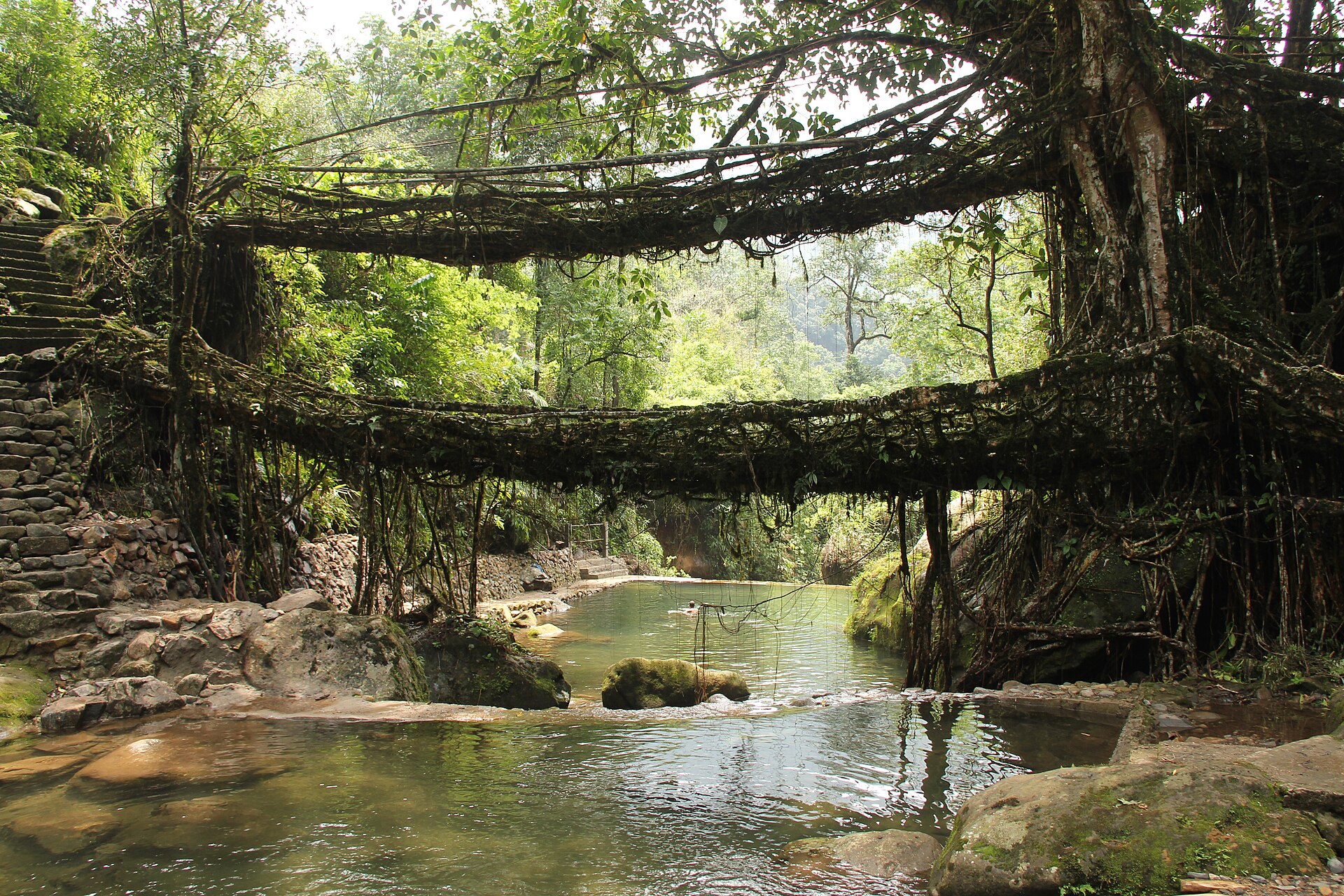
Deep in Meghalaya’s East Khasi Hills, generations of the Khasi people have grown something no engineer could build with concrete and steel: living bridges, made entirely of tree roots, trained across rivers and streams over decades. Some are over a century old. All of them are still alive and growing stronger every year. This guide covers the most famous of them all — the Double Decker Living Root Bridge at Nongriat — along with an easier alternative if the full trek isn’t for you.
Quick Facts
| Most famous bridge | Double Decker (Umshiang) Root Bridge, Nongriat |
| Location | Nongriat village, East Khasi Hills, near Cherrapunji (Sohra) |
| Trek starting point | Tyrna village |
| Trek distance | Approx. 3 km one-way (~3,500 stone steps each way) |
| Trek duration | 4-6 hours round trip |
| Trek difficulty | Moderate to high |
| Entry fee | ₹20-50 per person, plus approx. ₹20 for cameras |
| Timings | Roughly 6:00 AM – 5:00/6:00 PM |
| Best time to visit | October to April |
| Bridge age | Over 100 years (some sources cite up to 180 years) |
| Made from | Ficus elastica (Indian rubber tree) roots |
| Easier alternative | Single Root Bridge, Riwai village (near Mawlynnong) |
How These Bridges Are Made
Living root bridges are grown, not built. The Khasi people guide the aerial roots of the Ficus elastica tree across a river using betel nut trunks as temporary scaffolding, training the roots to grow in the desired direction. It takes roughly 15-25 years for a root bridge to become sturdy enough to use — and once mature, these bridges only get stronger over time, capable of holding up to 50 people at once and lasting 500 years or more. Locals sometimes call the Double Decker bridge the “Taj Mahal of Meghalaya,” a nod to both its uniqueness and the generations of patient craftsmanship behind it.
The Double Decker Root Bridge Trek
Nongriat’s Double Decker bridge — technically called the Umshiang bridge — is the only known living root bridge in the world with two stacked layers, one directly above the other. It’s the reason serious trekkers make the journey.
Getting there: The trek begins at Tyrna village, itself roughly a 20-30 minute taxi ride from Cherrapunji (about 54 km from Shillong). From Tyrna, you’ll descend a stone-step trail — most sources put it around 3,500 steps, though estimates range from 3,000 to 3,600 depending on the source — covering about 3 km one-way down to Nongriat village. The path crosses two iron suspension bridges along the way and passes through dense forest, small waterfalls, and traditional Khasi villages.
What to expect: The descent takes roughly 1.5-2 hours; budget 4-6 hours for the full round trip if you’re doing it in a single day. The climb back up is the harder half — take it slow, and start early to avoid both the heat and the risk of trekking back in the dark, since the trail isn’t lit.
Should you stay overnight? Nongriat has basic homestays and guesthouses. Many trekkers choose to stay a night rather than rush the round trip, which also gives time to visit the nearby Rainbow Falls and the natural swimming pools around the bridge — complete with small fish that nibble at your feet if you wade in.
An Easier Alternative: The Single Root Bridge at Riwai
If the 3,500-step trek sounds like too much, the Single Root Bridge near Riwai village offers a much gentler experience. It’s a short, roughly 300-meter walk with minimal stairs, and it sits close to Mawlynnong — officially recognized as one of the cleanest villages in Asia — making it easy to combine both stops in a single, relaxed half-day outing.
Best Time to Visit
October through April offers the safest trekking conditions, since the stone steps get significantly more slippery during Meghalaya’s intense monsoon season. That said, some trekkers specifically choose the monsoon months for the lush greenery and fuller waterfalls — just be prepared for a harder, wetter trek if you go that route.
How to Reach the Area
- By air: Fly into Guwahati (Assam), the nearest major airport, then continue by road or a connecting flight to Shillong
- By road: From Shillong, Cherrapunji is about a 2-hour drive (54 km); from Cherrapunji, Tyrna village (the trek’s starting point) is a further 20-30 minutes by taxi
- Local transport: Taxis from Cherrapunji to Tyrna typically cost around ₹400 for a private one-way charter; public shared taxis exist but run infrequently
Tips Before You Go
- Wear proper trekking shoes — the stone steps can be uneven and slippery, especially near waterfalls
- Carry water and snacks, though small shops along the trail do sell bottled water, chips, and fruit
- Start early to avoid the heat and give yourself enough daylight for the return climb
- Consider a local guide, especially for a same-day trip, since the trail can be confusing to navigate alone
- Pack light if you’re not staying overnight — every extra kilogram matters on 3,500 steps
Nearby Content on Beauty of India
Frequently Asked Questions
How many steps are there to the Double Decker Living Root Bridge? Approximately 3,500 stone steps each way, though estimates across sources range from 3,000 to 3,600, covering roughly 3 km from Tyrna village to Nongriat.
How old are Meghalaya’s living root bridges? The Double Decker bridge is estimated to be over 100 years old, with some sources citing up to 180 years. Root bridges take 15-25 years to mature into a usable structure and can last 500 years or more.
What is the entry fee for the Double Decker Root Bridge? Roughly ₹20-50 per person, plus an additional camera fee of about ₹20.
Is there an easier living root bridge to visit? Yes — the Single Root Bridge near Riwai village, close to Mawlynnong, involves just a short 300-meter walk and is a good option if the full Nongriat trek feels too demanding.
What is the best time to visit the living root bridges? October to April offers the safest, least slippery trekking conditions, though the monsoon months bring lusher scenery and fuller waterfalls for those willing to trek in wetter conditions.
Can I stay overnight near the Double Decker Bridge? Yes, Nongriat village has basic homestays and guesthouses, letting you split the trek across two days and explore nearby Rainbow Falls without rushing.
