
Last updated: September 2026
Chhath Puja gets the headlines. Diwali gets the fireworks. But Bihar’s festival calendar runs far deeper than its two most famous celebrations. Tucked into the Mithila region, among Dalit communities, and around a centuries-old temple in Gopalganj, three genuinely distinct folk festivals carry stories most of India — and most of the internet — has never properly told.
Quick Facts
| Festival | Region | When |
|---|---|---|
| Sama Chakeva | Mithila region | Kartik month (Oct-Nov), starting 7 days before Kartik Purnima |
| Salhesh | Dusadh community, statewide | Varies by region |
| Thawe Mela | Gopalganj | Twice yearly — Chaitra (March-April) and Ashvin/Navratri (Oct) |
Sama Chakeva: A Festival Built Entirely Around Sibling Love
Every winter, as migratory birds arrive in Bihar’s plains from the Himalayas, women and girls across the Mithila region begin an eight-day festival unlike almost anything else in the Hindu calendar. Sama Chakeva starts on the seventh day of Kartik and runs through Kartik Purnima, the full moon.
The story behind it traces back to Lord Krishna’s family. According to legend, Krishna’s daughter Sama was falsely accused of wrongdoing and cursed to become a bird. Her brother, Chakeva, prayed relentlessly for her transformation back into human form, and his devotion eventually won her salvation. The festival honors exactly that bond — a brother’s love saving his sister.
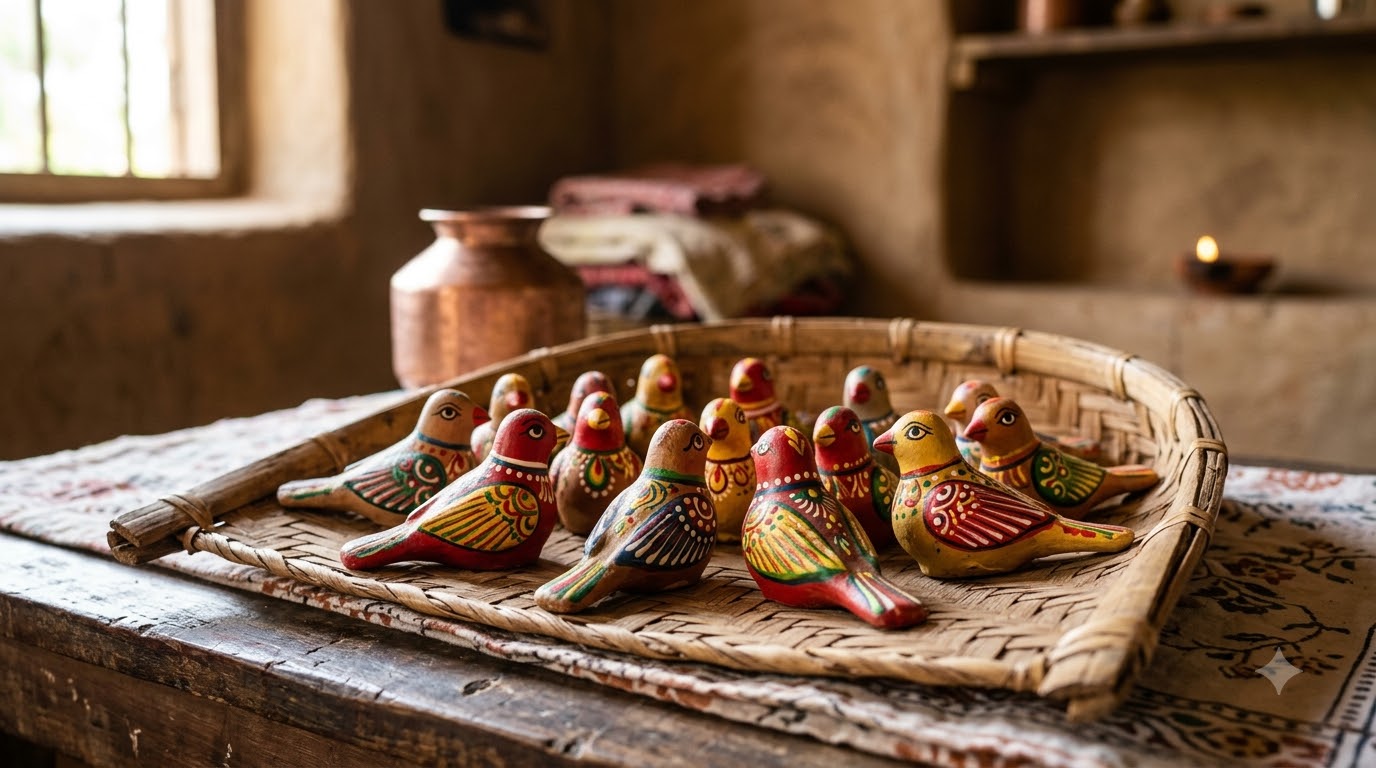
Here’s what makes Sama Chakeva genuinely unique: participants dig clay from the fields, then sculpt it into detailed bird figurines representing Sama, Chakeva, and a cast of supporting characters — Chugala, Vrindavan, various sages. Women worship these clay figures for eight days, singing folk songs passed down through generations. On Kartik Purnima, the idols get a final send-off, submerged in a river alongside a ritual dip.
The timing isn’t a coincidence, either. Migratory birds genuinely do arrive in Bihar’s plains during this exact window, and Mithila’s people consider them living embodiments of Sama and Chakeva returning home. It’s a rare festival that doubles as an unintentional nod to nature and seasonal change.
Salhesh: A Festival of Identity for a Marginalized Community
Salhesh belongs to a different world entirely. This festival centers on Salhesh, the chief deity of the Dusadh community — a Dalit group that has historically faced significant social marginalization in Bihar.
Rather than a purely devotional occasion, Salhesh functions as something deeper: a source of identity, cohesion, and self-respect for a community that hasn’t always received either from mainstream society. Performers recite folklore and local-dialect songs, alongside dance, acrobatics, and symbolic gestures that keep oral tradition alive. The festival builds toward a specific ritual close — devotees offer terracotta horse-riders to the deity as a final act of devotion.
Compared to Sama Chakeva’s widely documented Mithila roots, Salhesh’s story remains far less written about outside Bihar itself, which makes it exactly the kind of cultural touchpoint worth understanding if you want a fuller picture of the state’s diversity.
Thawe Mela: A 300-Year-Old Temple Fair With a Dramatic Origin Story
Roughly 6.5 km from Gopalganj town sits the Thawe Mandir, dedicated to a form of Durga known locally as Thawe Bhawani or Singhasini Devi. Twice a year — once in Chaitra (March-April) and again during Ashvin’s Navratri (October) — the temple hosts a major mela drawing devotees from across Bihar, Uttar Pradesh, and even Nepal.
The temple’s origin story reads like genuine folklore theater. Legend holds that a local king in the Thawe forest ruled harshly, ignoring the pleas of a devotee named Rahashu Bhagat, who worshipped the goddess Kamakhya. When the king refused to change course, Rahashu called upon the goddess directly. She arrived, manifesting through Rahashu’s own body in a moment intense enough that his head reportedly split open as her hand emerged. The king’s fort collapsed under a barrage of thunder, and his kingdom crumbled. Devotees built the temple on the exact spot where the goddess appeared, and Thawe Bhawani has been worshipped there ever since.
The temple’s most famous offering, a sweet called Pidkiya, remains a signature part of any visit today.
Why These Festivals Matter Beyond Bihar
Each of these three tells a different story about what Bihar’s culture actually contains: Sama Chakeva’s gentle, nature-tied celebration of family bonds; Salhesh’s role in giving a marginalized community pride and visibility; and Thawe Mela’s dramatic, temple-centered folklore drawing pilgrims across state lines. None of them get anywhere near the coverage of Chhath or Diwali, but together, they round out a much fuller picture of Bihar’s living traditions.
Nearby Content on Beauty of India
Frequently Asked Questions
What is Sama Chakeva festival? Sama Chakeva is a Mithila region folk festival celebrating the bond between siblings, based on a legend involving Lord Krishna’s daughter Sama and her brother Chakeva. It runs for eight days ending on Kartik Purnima, and involves crafting and worshipping clay bird figurines.
Who celebrates Salhesh festival? Salhesh is celebrated primarily by the Dusadh community, a Dalit group in Bihar, honoring Salhesh as their chief deity. The festival provides social identity and cohesion through folklore, music, dance, and terracotta horse-rider offerings.
When is Thawe Mela held? Thawe Mela takes place twice a year at Thawe Mandir near Gopalganj — once during Chaitra (March-April) and again during Ashvin’s Navratri period (October).
Where is Thawe Mandir located? Approximately 6.5 km from Gopalganj town, Bihar, on the Gopalganj-Siwan National Highway.
Are these festivals open to outside visitors? Yes, all three welcome respectful visitors, particularly Thawe Mela, which already draws pilgrims from neighboring states and Nepal.
Why don’t more people know about these festivals? Chhath Puja and Diwali dominate Bihar’s festival coverage nationally and internationally, leaving regional and community-specific festivals like these three with far less documentation and visibility, despite their genuine cultural significance.
