
Last updated: September 2026
In most of India, Diwali is the finale — the biggest celebration of the year, after which the festival calendar quiets down. In Bihar, it’s only the opening act. Exactly one week after the last diya is lit for Lakshmi, the state turns its full attention to an entirely different kind of festival — one built around fasting, discipline, and standing waist-deep in the Ganga at dawn. This is Bihar’s festival season, and few places in India experience back-to-back celebrations quite like it.
Quick Facts: The 2026 Sequence
| Festival | 2026 Date |
|---|---|
| Dhanteras | November 6 |
| Choti Diwali (Naraka Chaturdashi) | November 7 |
| Diwali (Lakshmi Puja) | November 8 |
| Govardhan Puja | November 9 |
| Bhai Dooj | November 10 |
| Chhath Puja begins (Nahay Khay) | November 13 |
| Chhath Sandhya Arghya | November 15 |
| Chhath Usha Arghya (festival ends) | November 16 |
Diwali in Bihar: The Same Festival, a Distinct Rhythm
Bihar’s Diwali follows the broader North Indian pattern closely — five days of celebration built around the worship of Lakshmi and Ganesha, the lighting of diyas, and family gatherings. What makes it worth understanding on its own terms is less about unique rituals and more about what comes immediately after.
Dhanteras (November 6): The season opens with the traditional purchase of gold, silver, or new kitchen utensils, considered auspicious for inviting prosperity into the home.
Choti Diwali (November 7): Homes get a final cleaning and decoration push, oil lamps are lit for the first time, and in many Bihar households, this is when sweets and snacks for the main celebration are finished.
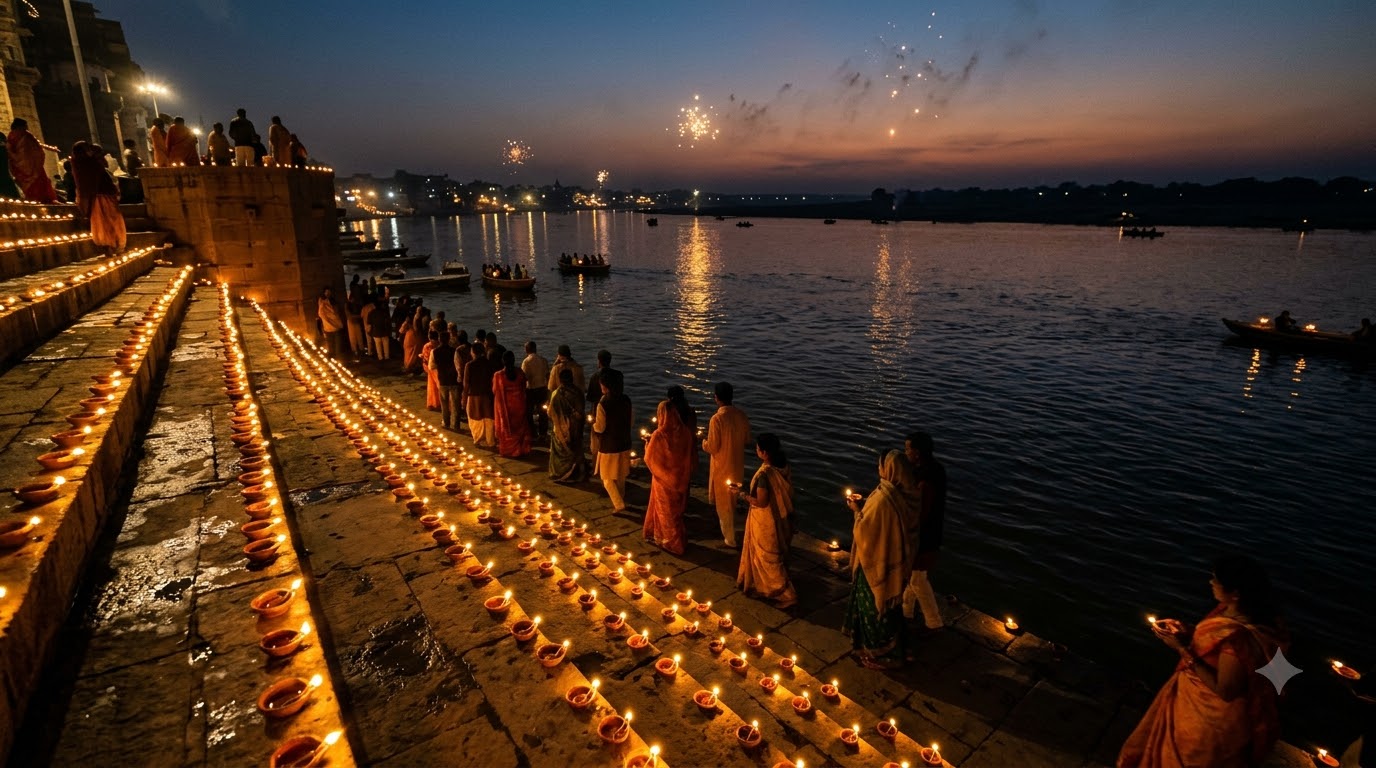
Diwali / Lakshmi Puja (November 8): The main event. Homes are lit with rows of diyas, Lakshmi and Ganesha are worshipped in the evening Pradosh Kaal (roughly 6:00-8:00 PM), and firecrackers mark the night across cities and villages alike.
Govardhan Puja (November 9): Commemorating Krishna lifting Govardhan Hill to shelter villagers from Indra’s wrath, this day often involves elaborate food offerings.
Bhai Dooj (November 10): The season’s final major ritual, celebrating the bond between brothers and sisters, closing out the Diwali cluster.
The Turn: Why Chhath Follows So Closely
Here’s what makes Bihar’s festival calendar genuinely distinct: Chhath Puja begins just three days after Bhai Dooj, and its most important day — Sandhya Arghya — falls exactly one week after Diwali itself, on Kartik Shashthi. For many Bihari families, this isn’t a coincidental scheduling quirk; it’s the emotional center of the entire festival season, and preparations for it often begin quietly even while Diwali celebrations are still underway.
The contrast between the two festivals is part of what makes the sequence so striking. Diwali is loud — fireworks, sweets, bright lights, indulgence. Chhath, by contrast, is austere: a 36-hour fast without food or water, no fireworks, no idol worship, just devotees standing personally in the river at dawn and dusk, offering gratitude to the sun. Bihar moves from one of Hinduism’s most exuberant celebrations to one of its most demanding and intimate within a single week.
Planning a Trip Around Both Festivals
If you’re considering visiting Bihar during this period, November 2026 offers a genuinely rare opportunity to witness two dramatically different festival experiences in a single trip — provided you plan around both properly.
For Diwali (November 6-10): Patna’s markets, particularly around older commercial districts, come alive with shopping, lights, and street food in the days leading up to Lakshmi Puja. Expect a festive, energetic city atmosphere similar to what you’d find during Diwali anywhere in North India.
For Chhath (November 13-16): The mood shifts entirely. Head to the Ganga ghats — Gandhi Ghat, Patliputra Ghat, Collectorate Ghat, and dozens more — for the Sandhya Arghya on November 15 and Usha Arghya on November 16. For the full details on ghats, rituals, and what to expect, see our complete Chhath Puja in Patna guide.
Practical note: Hotels and transport in Patna book up well in advance of both festivals, and especially so for the full stretch covering both — if you’re planning to experience the whole season, book accommodations early.
Why This Sequence Matters Beyond Just Bihar
Because Bihar carries such a large migrant population across Delhi, Mumbai, and cities worldwide, this same Diwali-to-Chhath rhythm plays out — on a smaller scale — wherever Bihari and Purvanchali communities have settled. Watching both festivals unfold in Patna itself, though, means experiencing them at their fullest scale and in their original cultural context.
Nearby Content on Beauty of India
Frequently Asked Questions
How many days apart are Diwali and Chhath Puja in 2026? Exactly one week. Diwali falls on November 8, 2026, and Chhath Puja’s main Sandhya Arghya falls on November 15, 2026.
Is Diwali celebrated differently in Bihar than the rest of India? The core rituals are largely similar to the broader North Indian Diwali tradition. What’s distinct is what follows — Bihar moves almost immediately from Diwali’s celebrations into Chhath Puja’s much more austere, demanding observance.
Which festival is bigger in Bihar, Diwali or Chhath? Both are major festivals, but for many Bihari families, Chhath carries even deeper emotional and spiritual significance than Diwali, owing to its demanding rituals and centuries-old roots specifically in the region.
Can I visit Bihar to experience both Diwali and Chhath Puja? Yes — the two festivals fall within about a week of each other in November, making it possible to experience both distinct atmospheres in a single, well-planned trip to Patna.
What is the full 2026 festival sequence in Bihar? Dhanteras (Nov 6), Choti Diwali (Nov 7), Diwali (Nov 8), Govardhan Puja (Nov 9), Bhai Dooj (Nov 10), followed by Chhath Puja (Nov 13-16).
