
Last updated: August 2026
Most people planning a spiritual trip through India head straight for Varanasi or Rishikesh. But Bihar quietly holds one of the most significant stops on any spiritual circuit in the country — the places where the Buddha attained enlightenment, delivered his final sermon, and where Emperor Ashoka once spread his message across the empire. This Bihar spiritual circuit adds cooler September weather, real infrastructure improvements over the past few years, and far fewer crowds than the better-known circuits, making it a genuinely underrated trip.
This itinerary covers three days, three towns, and a mix of ancient history, active pilgrimage sites, and modern additions like Rajgir’s glass skywalk bridge.
Quick Facts
| Circuit towns | Bodh Gaya, Rajgir, Vaishali |
| Starting point | Patna |
| Total duration | 3 days, can extend to 4-5 with Nalanda added |
| Best season | October-March; September marks the start of comfortable weather |
| Approx. budget | Rs. 6,000-12,000 per person (mid-range, excluding flights to Patna) |
| Best for | History lovers, Buddhist pilgrims, slow travelers, families with older kids |
Why September Works
September sits right at the tail end of Bihar’s monsoon. The punishing summer heat (parts of the state cross 40°C from April to June) has broken, humidity is dropping, and the landscape is genuinely green from the rains — a different look from the dusty winter months most tourists visit in. It’s also before the winter crowd surge (November-February is peak season, when Rajgir’s weekend queues can stretch over an hour). If you don’t mind a small chance of late-monsoon showers, September gets you cooler weather with noticeably thinner crowds.
Day 1: Patna to Bodh Gaya
Getting there: Bodh Gaya sits roughly 110-120 km from Patna via the direct route (about 3-4 hours by road), or up to 178 km if you route through Rajgir and Nalanda. Regular buses and Bihar State Tourism Development Corporation coaches run this route, or you can hire a private taxi for a more flexible schedule.
What to see:
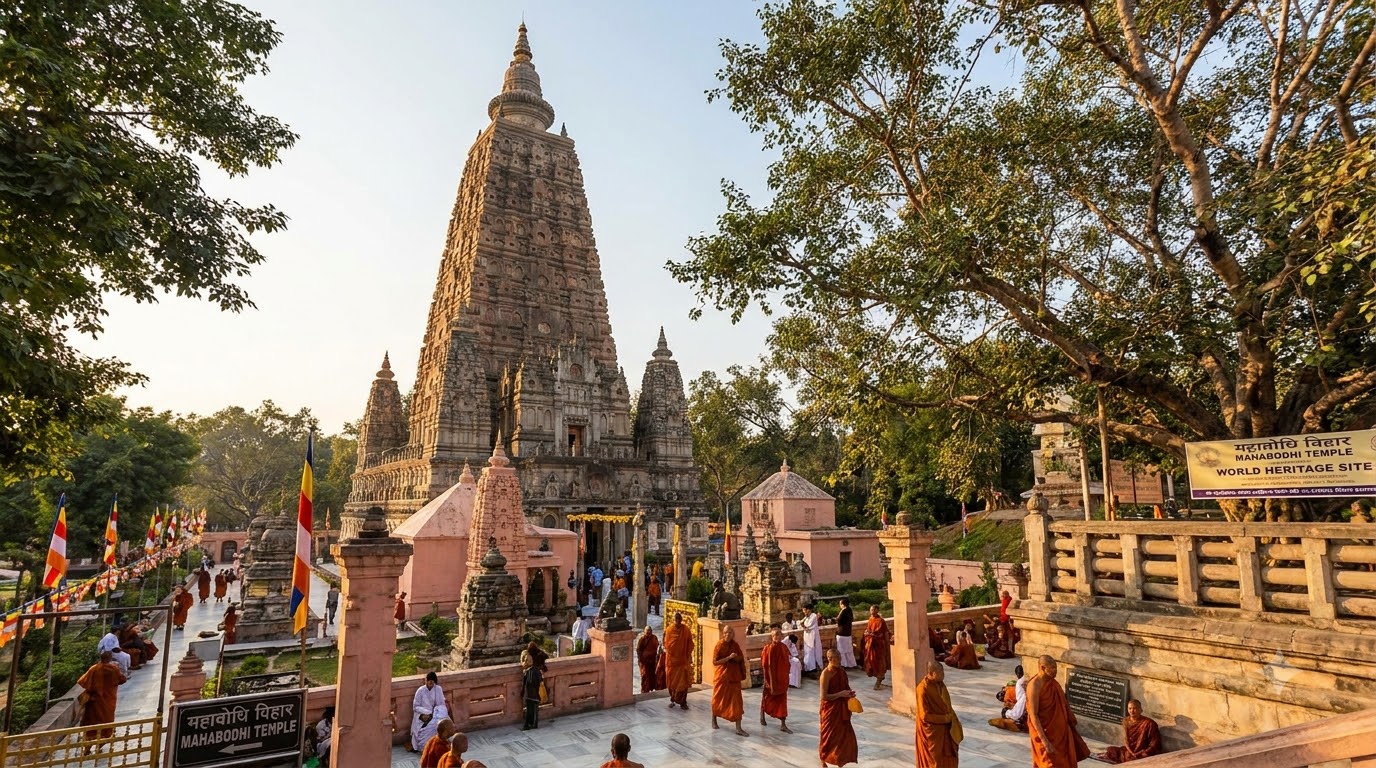
- Mahabodhi Temple — a UNESCO World Heritage Site marking the spot where Prince Siddhartha attained enlightenment under the Bodhi Tree. Entry is free; expect a small camera fee (roughly Rs. 100-200) if you want photos inside. Open 5:00 AM to 9:00 PM — arriving early morning means fewer crowds and cooler temperatures for the walk around the complex.
- The 80-foot Great Buddha Statue, built in Japanese style, a short walk from the main temple
- International monasteries — Thai, Japanese, Tibetan, and Bhutanese temples are all scattered around town, each with distinct architecture worth a quick visit
- Dungeshwari Caves, where Buddha practiced intense meditation before his enlightenment, a short drive outside town
Budget for the day: Modest guesthouses run Rs. 1,000-2,500/night; a full day of sightseeing plus meals can be comfortably done for ₹1,500-2,000 per person beyond accommodation.
Family suitability: Good for families with older children who can handle some walking; the temple complex is peaceful rather than crowded most mornings, making it manageable even for a first spiritual-travel experience with kids.
Day 2: Bodh Gaya to Rajgir
Getting there: Rajgir sits about 90-100 km from Patna and roughly 70-80 km from Bodh Gaya, a 2-2.5 hour drive. Regular buses and taxis connect both towns.
What to see:
- Rajgir Ropeway, one of India’s oldest single-person chair lifts, offering aerial views up to the Vishwa Shanti Stupa (World Peace Pagoda)
- The Glass Skywalk Bridge, a newer addition inside Rajgir Nature Safari Park — built at a striking height, with glass-floor panels for a thrill along the walk
- Rajgir Nature Safari, a 500-acre park with a suspension bridge, zipline, and rock-climbing zone — good for families wanting some activity mixed into the spiritual sightseeing
- The hot springs, considered sacred and therapeutic by both Hindus and Jains
- The Cyclopean Wall and ancient cave sites tied to the early Buddhist councils held here after the Buddha’s death
One heads-up: the ropeway occasionally closes for maintenance without much public notice. If it’s the main reason for your visit, a quick call ahead to confirm it’s running saves a wasted trip.
Budget for the day: Ropeway and Glass Bridge tickets are modest (typically under Rs. 200-300 each); budget guesthouses in Rajgir run similarly to Bodh Gaya, Rs. 1,000-2,500/night.
Family suitability: Excellent — Rajgir has the most active, kid-friendly attractions of the three stops, blending nature and adventure activities with the historical sites.
Day 3: Rajgir to Vaishali (via Patna)
Getting there: Vaishali is the outlier here — it sits north of the Ganges, about 56-65 km from Patna in the opposite direction from Rajgir and Bodh Gaya. Most travelers loop back through Patna before heading out to Vaishali, making it a natural final stop before flying out or catching a train home.
What to see:
- The Ashokan Pillar at Kolhua, a single, highly polished sandstone column over 18 meters tall, topped with a lion figure — one of the finest-preserved Ashokan pillars in India, marking the spot associated with Buddha’s last sermon
- The Relic Stupa of Vaishali, dated to around the 5th century BCE and considered one of the earliest archaeologically confirmed stupas in the world, believed to have once held a portion of the Buddha’s ashes
- Vishwa Shanti Stupa, built by Japan’s Nipponzan Myohoji sect, enshrining a portion of the Buddha’s relics
- Bawan Pokhar Temple, a Pala-period temple with well-preserved Hindu deity images on the northern bank of the tank
Budget for the day: Vaishali is a lighter day, mostly outdoor archaeological sites with minimal entry fees — a good, relaxed close to the trip before heading back to Patna.
Family suitability: Good for a shorter, less physically demanding day — ideal if energy is running low by day three.
Total Approximate Budget (Per Person, Mid-Range)
| Category | Approx. Cost |
|---|---|
| Accommodation (2-3 nights) | Rs. 2,500-6,000 |
| Local transport (taxi/bus between towns) | Rs. 2,500-4,000 |
| Food | Rs. 1,500-2,500 |
| Entry fees & activities | Rs. 500-1,000 |
| Total | Rs. 6,000-12,000 |
(Excludes flights/trains to reach Patna itself.)
How to Structure Your Bihar Spiritual Circuit Trip From Patna
If you’re flying or training into Patna first, a natural loop is: Patna → Bodh Gaya (via Rajgir or direct) → Rajgir → back through Patna → Vaishali → Patna. Travelers with an extra day often add Nalanda (the ancient university ruins) between Rajgir and Bodh Gaya, since it sits almost directly on that route.
Nearby Content on Beauty of India
Frequently Asked Questions
Is September a good time to visit Bihar’s spiritual circuit? Yes — September marks the end of monsoon season, bringing cooler temperatures and green landscapes, with noticeably fewer crowds than the peak winter season (November-February). It’s one of the most comfortable windows to complete this Bihar spiritual circuit.
How many days do you need for Bodh Gaya, Rajgir, and Vaishali? Three days covers the essentials comfortably. Add a fourth day if you want to include Nalanda’s ancient university ruins along the way.
What is the approximate budget for this trip? Roughly Rs. 6,000-12,000 per person for a mid-range 3-day trip, covering accommodation, local transport, food, and entry fees — excluding travel to reach Patna itself.
Is this circuit suitable for families? Yes, especially Rajgir, which combines historical sites with nature-park activities suitable for children. Bodh Gaya and Vaishali involve more walking and quiet, reflective sightseeing.
Do I need to book anything in advance? General entry to the temples and stupas doesn’t require advance booking, but if the Rajgir ropeway or glass bridge is a priority, booking online or calling ahead is worth it, especially since the ropeway can close for maintenance without notice.
